Learning to Reconcile in a Divided World
Advent has a way of finding us exactly where we are. Last week, we reflected on how Advent begins in the dark — not in our polished moments, but in the places that feel unfinished and unsettled. This second week meets us in another honest place: the longing for peace, especially the kind that feels fragile or complicated in real relationships.
Luke tells us that when Jesus was born, heaven erupted in a declaration of peace. “Glory to God in the highest heaven, and on earth peace to those on whom His favor rests.” But that peace wasn’t spoken into a world that was calm or unified. It was announced into a world where walls separated people, where mistrust shaped daily life, and where reconciliation was more hope than reality. Peace entered through a child in a manger, not through the removal of conflict but through the presence of God within it.
We’ve been thinking about that a lot this year. Life in our home feels full, even chaotic at times — a newborn who rarely wants to be put down, two boys in new stages of activity and curiosity, the endless rhythm of meals, laundry, school schedules, ministry demands, and the thousand small interruptions that make up a day. Peace is something we hunger for. We’re learning to look for it in moments of stillness, even if it’s only a few minutes snatched between responsibilities. But there’s also a deeper peace we’ve been wrestling with — the peace that has to do with people and stories, history and hurt, misunderstandings and the courage to move toward others instead of away.

Advent Peace Looks Like Making Space
Serving in one place for a long time brings tremendous joy, but it also brings strain. When you remain in the same relationships, the same culture, and the same spiritual landscape for years, conflicts don’t simply disappear with time. Sometimes they settle quietly beneath the surface, and sometimes they press forward and ask to be dealt with. In the last couple of years, God has been pressing gently but persistently on my own heart, showing me places where forgiveness had grown thin, where unspoken frustrations had turned into distance, and where I had allowed hurt to accumulate rather than be brought into the light.
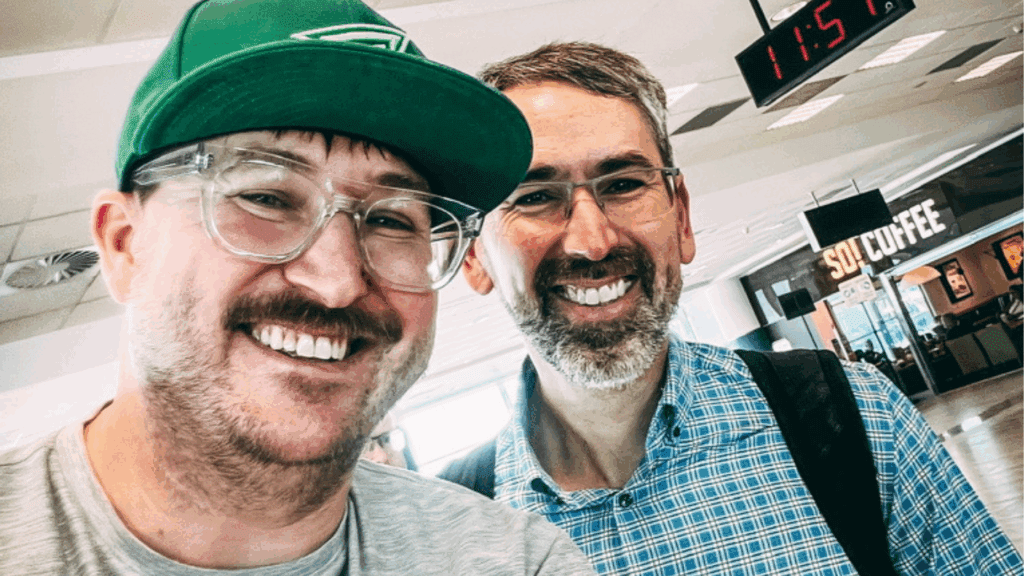
A recent conversation became a picture of what Advent peace can look like. I sat across from my former director, someone I care about deeply — a man who stood in my wedding, who has served this city faithfully, and who was both a mentor and a colleague in seasons that were meaningful and, at times, difficult. We talked openly about decisions made more than a decade ago, about what each of us saw and felt, about the limitations and convictions that shaped those years. I found myself owning things I wish I had handled differently, things I only now see with clarity. And he shared the weight of what those years had meant for him too.
Nothing about that moment was dramatic. It was quiet, honest, and deeply human — two men who have spent nearly fifty years combined in Prague, recognizing that peace doesn’t erase the past but does give it a different kind of clarity. It made space for understanding. It made room for humility. It softened something that had been hardened by time.
But not every story ends with reconciliation. Some relationships require distance, not closeness, for the sake of emotional and spiritual health. Some wounds take longer to heal. Some people cannot be safely invited back into certain spaces. And sometimes, the most faithful act of peace is releasing someone in forgiveness even if the relationship itself does not resume. I’m learning that this too is a form of peace — not the peace of restored friendship, but the peace of no longer carrying bitterness.
A Table of Peace in a Culture That Avoids Conflict
Here in the Czech Republic, this tension shows up in cultural ways as well. Peace is often understood as the absence of conflict rather than the presence of truth. People tend to avoid difficult conversations, not out of cruelty but out of a long history of survival in a country repeatedly shaped by external control. False peace can become a protective habit — a way of keeping life calm on the surface even when trust is broken underneath. You smile, you nod, you stay polite, but you keep a distance because real peace would require real vulnerability.
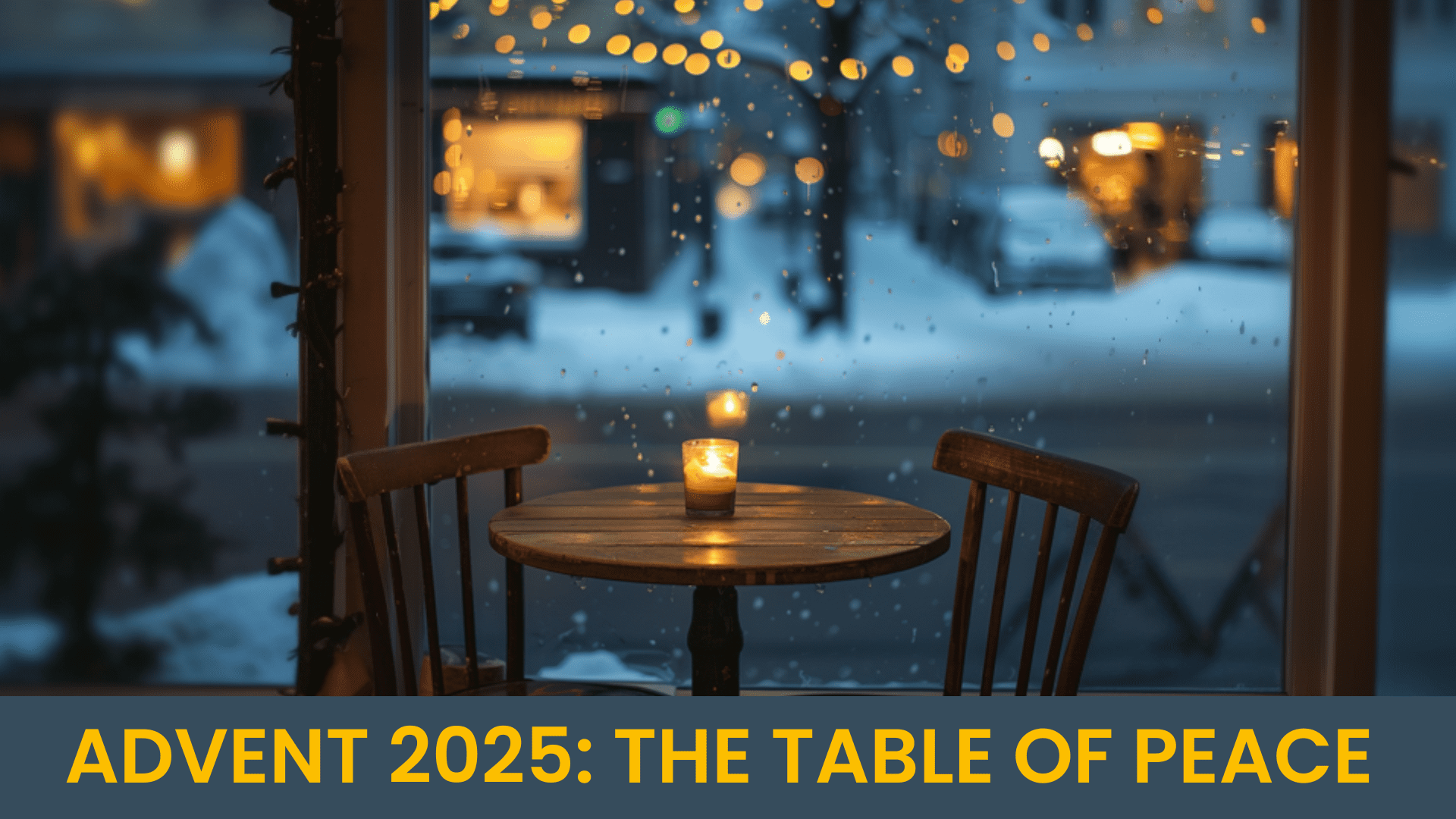
The gospel invites us beyond that. Ephesians says that Jesus Himself is our peace, and that He tears down dividing walls of hostility. The image is not passive. It’s active, courageous, and disruptive in the best way. When the gospel takes root in us, we don’t settle for quiet distance or polite avoidance. We don’t build thicker walls. We build longer tables. Tables long enough for people who disagree. Tables wide enough for people who have history. Tables that act as bridges when nothing else can.
Peace Grows Through Movement
Peace grows when we move toward others the way God moved toward us. Not blindly, not without discernment, but with a posture of humility and hope. Advent reminds us that God enters the world as it is, not as it should be. He sits at tables where past wounds are real and present tensions still linger. He does not demand perfection from us — only willingness.
As we move deeper into Advent, we’re embracing a simple practice again this week. We’re praying that Jesus would make space for peace at our table. We’re asking Him to show us where forgiveness is needed — in our hearts or in our relationships. And we’re asking for courage to move toward someone if He prompts us, whether that means initiating a conversation, extending an invitation, or simply releasing someone in forgiveness and blessing.
Practice: The Table of Peace
1. Pray this prayer:
“Jesus, make space for peace at our table.”
2. Ask Jesus this question:
“Jesus, is there someone I need to forgive, bless, or move toward with humility?”
3. Act on it.
Extend an invitation if Jesus prompts you. It might be someone you’ve drifted from, someone where tension has quietly lived, or someone you simply haven’t made space for. The power is not in perfection but in presence.
This week’s invitation is straightforward: Who could you invite to your table as a gesture of peace?
In medieval Europe, Christmas was one of the great “settling” times of the year. Rents were paid, accounts were balanced, and feasts brought communities back together. With the church calling for peace from Advent to Epiphany, the Christmas table became a natural place to cool tensions, restore honor, and practice reconciliation. Peace and the table have long belonged together.
Advent peace is not the absence of conflict but the presence of Christ within it.
And if we let Him, He will teach us how to make room — in our homes, in our schedules, in our conversations, and in our hearts.
Peace is coming.
Let’s create space for it to grow.




0 Comments